Beyond the AI Hype: Intelligent Automation for Benefits Administration

Beyond the AI Hype: Intelligent Automation from DataPath

Benefits administration has always been a delicate balancing act. Between managing enrollment deadlines, processing contributions, ensuring COBRA compliance, and handling claims reimbursements, TPAs and benefit administrators operate in a highly complex environment that demands both precision and speed. Manual processes consume valuable time and invite costly errors, while the stakes for accuracy in our compliance-intensive industry continue to escalate. Enter the latest wave of AI solutions promising to revolutionize everything.  But before you get swept

Home » Summit

Does Your State or City Require Commuter Benefits?

Commuting to and from work daily can be quite a headache and consume a lot of valuable time, especially for employees who live near or travel into a big metro area. With the average commute at 26 minutes, it takes nearly an hour each day to get to and from your place of employment. Consider, too, that an estimated 76% of U.S. workers travel to their place of work every day, trying to avoid traffic

Home » Summit

Streamlining EFT Operations: The Importance of NACHA Nested TPS Rules

The electronic funds transfer (EFT) landscape transformed significantly when NACHA implemented the Nested Third-Party Sender (TPS) rules in September 2022. For third-party benefits administrators (TPAs) who rely on ACH providers to process payroll deductions or premium payments, understanding these rules isn’t optional—it’s essential for operational continuity and regulatory compliance.. What are the NACHA TPS rules? Traditionally, ACH payments involved a straightforward path. An originator (employer) sent funds through an Originating Depository Financial Institution (ODFI) to

Home » Summit

Understanding COBRA Eligibility: Who Qualifies and When?

Understanding the intricacies of the Consolidated Omnibus Budget Reconciliation Act (COBRA) can be challenging for employers and employees alike. It may be especially daunting when trying to understand who qualifies for COBRA coverage and when they qualify.  What is COBRA? COBRA is a federal law enacted in 1985 that requires employers with 20 or more employees to offer continuation coverage. This applies only to employees and their dependents whose coverage would end due to qualifying

Home » Summit

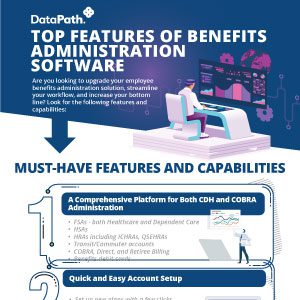
INFOGRAPHIC: Benefits Administration Software Top Features

benefits administration software features

The following infographic outlines the must-have features of benefits administration software for third party benefits administrators. If your solution doesn’t have all of these, it may be time to upgrade. To streamline your workflow and increase the bottom line, look for these features and capabilities.

Home » Summit

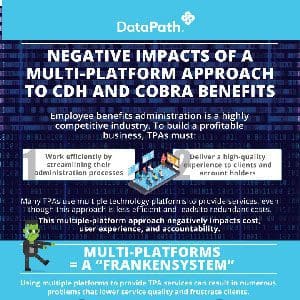
INFOGRAPHIC: Negative Impacts of a Multi-Platform Approach

Using a multi-platform approach to CDH and COBRA benefits administration can create a host of problems for third party benefits administrators. The following infographic highlights the negative impacts of a multi-platform approach and examines the benefits of a single solution.

Home » Summit

Non-Discrimination Testing

Offering employee health benefits is a great way to attract and retain talent, but companies must follow strict regulations to ensure fairness to all employees. The IRS monitors highly compensated employees’ eligibility and compares that to benefits available to lower compensation employees. All health plans must undergo annual non-discrimination testing. Learn more below. What is Non-Discrimination Testing? IRS rules state that self-insured health plans cannot discriminate in favor of Highly Compensated Employees (HCEs) concerning eligibility or benefits.

Home » Summit

How Does Medicare Affect HSA Usage?

Qualified High Deductible Health Plan (HDHP) participants can use Health Savings Accounts (HSAs) to help cover their deductible responsibility. But what happens when they become eligible for Medicare?  Medicare Basics Medicare is a federal health insurance program for those aged 65 and older as well as younger Americans with certain disabilities or End-Stage Renal Disease. Each of Medicare’s four parts offers a different type of coverage: HSA Basics An HSA is a tax-advantaged benefit that

Home » Summit

Employer Benefits Nondiscrimination Testing

Employee health benefits can be an excellent way to attract and retain talent. However, companies must follow strict regulations to ensure fair treatment for all employees. The IRS monitors highly compensated employees and their eligibility, pre-tax contributions, or available benefits compared to lower compensation employees. For that reason, all health plans must undergo annual nondiscrimination testing. Learn more below. What is Nondiscrimination Testing? IRS rules state that self-insured health plans cannot discriminate in favor of Highly

Home » Summit