AI Expands What’s Possible. Humans Protect What’s at Stake.
DataPath AI - Executive Insights

A framework for AI in benefits administration – getting it right and the competitive opening for organizations that do. The pace of AI adoption in our industry is unlike anything we’ve seen before. Workflows that used to take days now take minutes. Patterns that might have been missed are identified in moments. Most importantly, teams are reclaiming countless hours to focus on what truly drives the business: clients, strategy, and growth. “Intelligent automation” is what

Home » industry_feature

Market Shifts: Turn Disruption into Opportunity

Market Shifts Turn Disruption into Opportunity

Acquisitions continue to shake up our industry, but now at a faster pace and on a larger scale than ever before. TPAs and brokers are buying TPAs. Banks are acquiring TPAs or books of business. Private equity is consolidating at speed. Health plans are purchasing TPAs, books of business, and platforms. All of this change can spark feelings of fear, frustration, or even grief. That reaction is completely understandable. You are focused on growth, sustainability,

Home » industry_feature

HRTech Series: Why HR Leaders Still Need Human Expertise to Guide AI in Benefits Administration

AI in Benefits Administration

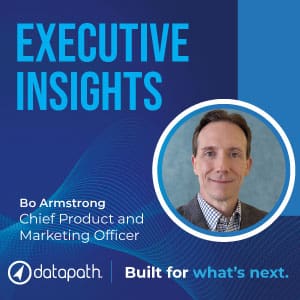
Bo Armstrong, Chief Marketing and Product Officer, was recently featured in HRTech Series Insights. The article, “Why HR Leaders Still Need Human Expertise to Guide AI in Benefits Administration,” argues that while artificial intelligence is rapidly improving efficiency across HR functions, benefits administration remains an area where human expertise is essential. AI’s real value in this field is through augmentation (not replacement) of experienced benefits professionals. “Artificial intelligence has become ubiquitous across HR functions, from

Home » industry_feature

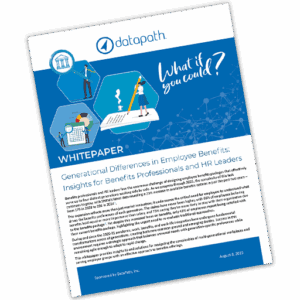
WHITEPAPER: Generational Differences in Employee Benefits: Insights for Benefits Professionals and HR Leaders

Benefits professionals and HR leaders face the enormous challenge of designing effective employee benefits packages that serve up to four distinct generations working side by side. The complexity of this task continues to grow, with SHRM’s latest data revealing a 23% increase in available benefits options in just the past two years – from 175 in 2023 to 216 in 2024.This expansion reflects more than just market innovation; it underscores the critical need for employers

Home » industry_feature

How the One Big Beautiful Bill Act Will Transform Your Employee Benefits Strategy

How the One Big Beautiful Bill Act Will Transform Your Employee Benefits Strategy; image of 6 people in a professional environment looking happy and talking

H.R. 1 of the 119th Congress, aka the One Big Beautiful Bill Act (OBBBA), was signed into law on July 4, 2025. This legislation is a comprehensive reimagining of how America supports working families. For benefits professionals, this sweeping reform presents both novel opportunities and immediate challenges that will reshape the employee benefits landscape for years to come.  At its core, the OBBBA recognizes a fundamental truth: today’s workers are juggling more responsibilities than ever

Home » industry_feature

HSA Expansion Opens the Door to Millions 

HSA Expansion Opens the Door for Millions

The Health Savings Account (HSA) landscape is about to experience its most significant expansion in decades. H.R. 1 (119th Congress), Pub. Law 119‑21 (also known as the One Big Beautiful Bill Act (OBBBA)), signed into law on July 4, 2025, automatically treats all Bronze and Catastrophic level health plans available on ACA exchanges as HSA-qualified high-deductible health plans (HDHPs) for plan years beginning after December 31, 2025.  It is important to note that the provision only applies to

Home » industry_feature

Why TPAs and PEOs Are Choosing DataPath

DataPath Platform - Why TPAs and PEOs are choosing DataPath

Third-party administrators (TPAs) and professional employer organizations (PEOs) are under increasing pressure to provide greater value to their employer groups by assisting companies in attracting and retaining top talent, addressing the needs of a multi-generational workforce, and connecting healthcare with financial wellness. To meet this demand, TPAs and PEOs must find ways to improve their business operations with seamless, efficient benefits administration while controlling costs and maintaining compliance. The challenge isn’t just managing the complexity

Home » industry_feature

The Great Benefits Reset of 2025

As we progress through 2025, employers and employees are navigating what some industry experts are calling “The Great Benefits Reset.” Economic changes, shifting workforce expectations, and updates in healthcare policies are driving organizations to rethink their benefits strategies, especially regarding health benefit accounts. It is more important than ever for HR leaders and employees to understand these options to make the most of their healthcare investments. The Driving Forces Behind the Benefits Reset Economic Pressures

Home » industry_feature

Employer-Sponsored Benefits Gain Importance in Employment Advertising

Attracting talent demands more than just a competitive salary. Today’s workforce highly values a strong employer-sponsored benefits package, and job seekers are increasingly evaluating employee benefits when considering potential employers. For employers, highlighting benefits in job ads has evolved from a best practice to an essential strategy. As the demand for transparency and comprehensive compensation packages grows, savvy employers increasingly leverage their benefit programs to strengthen their appeal to top talent. By the middle of

Home » industry_feature

Streamlining EFT Operations: The Importance of NACHA Nested TPS Rules

The electronic funds transfer (EFT) landscape transformed significantly when NACHA implemented the Nested Third-Party Sender (TPS) rules in September 2022. For third-party benefits administrators (TPAs) who rely on ACH providers to process payroll deductions or premium payments, understanding these rules isn’t optional—it’s essential for operational continuity and regulatory compliance.. What are the NACHA TPS rules? Traditionally, ACH payments involved a straightforward path. An originator (employer) sent funds through an Originating Depository Financial Institution (ODFI) to

Home » industry_feature